
Short answer: Yes, sometimes. But not always.
Overclocking can reduce CPU or GPU bottlenecks in specific situations, but it is not a magic fix. In 2026, with modern CPUs, GPUs, and games behaving very differently across resolutions and workloads, understanding when overclocking helps and when it doesn’t is critical. This guide gives you a realistic, no-hype answer so you don’t waste time, risk hardware, or chase fake FPS gains.
What Is Overclocking?
Overclocking means running a component faster than its factory-set speed to gain more performance.
Clock speed explained simply
Clock speed is how many operations a CPU or GPU can perform per second. Higher clocks = more work done per second.
CPU vs GPU vs RAM overclocking
- CPU overclocking: Improves game logic, physics, draw calls, and frame pacing
- GPU overclocking: Improves rendering, shaders, textures, and visual workload
- RAM overclocking: Improves data access speed, especially important for CPU-heavy games
Factory limits vs manual tuning
Manufacturers leave performance headroom for stability and power efficiency. Overclocking uses that headroom, but only if cooling and power allow it.
What Is a Bottleneck in Gaming?
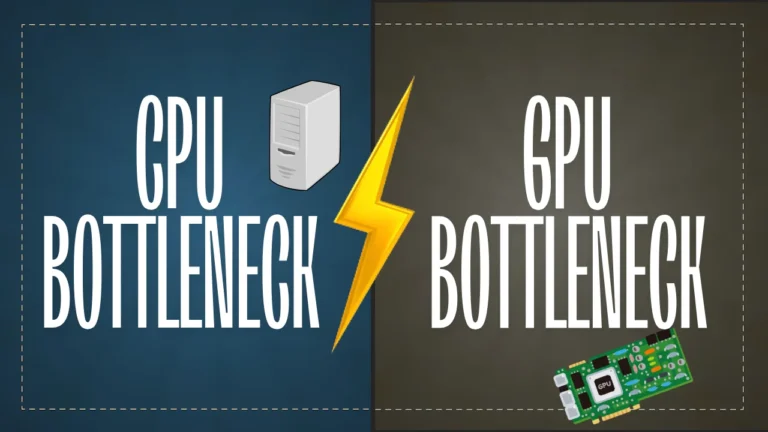
A bottleneck happens when one component limits overall performance while others wait idle.
CPU bottleneck explained
The CPU can’t process game logic fast enough, so the GPU waits. Common in esports and high-FPS gaming.
GPU bottleneck explained
The GPU is fully loaded rendering frames, while the CPU has unused capacity. Common at higher resolutions.
Resolution-based bottlenecks
- 1080p: Mostly CPU-limited
- 1440p: Balanced
- 4K: Mostly GPU-limited
Does Overclocking Actually Reduce Bottlenecks? (Honest Answer)
Overclocking the CPU – When It Helps
- CPU-limited games
- High refresh rate (144–360Hz)
- Competitive FPS titles like Valorant and CS2
Overclocking the CPU – When It Does NOT Help
- GPU-bound scenarios
- Very old CPU architectures
- Systems already hitting thermal or power limits
Overclocking the GPU – When It Helps
- GPU-heavy games
- 1440p and 4K resolutions
- Shader- and texture-heavy workloads
Overclocking the GPU – When It Doesn’t
- CPU-limited systems
- VRAM-limited GPUs (memory size matters more than speed)
CPU vs GPU – Which Should You Overclock First?
| Scenario | Overclock First |
|---|---|
| Low GPU usage, high CPU usage | CPU |
| High GPU usage (95–100%) | GPU |
| 1080p competitive gaming | CPU |
| 4K gaming | GPU |
| Laptop | Usually neither (limited headroom) |
Can Overclocking Fix CPU Bottleneck Completely?
Situations Where Overclocking Is Enough
- Mild CPU bottleneck (5–15%)
- Modern CPUs with strong single-core performance
- Adequate cooling and power delivery
Situations Where Only Upgrading Helps
- Old quad-core CPUs
- Weak single-thread performance
- Severe CPU bottlenecks above 20–30%
Overclocking reduces bottlenecks, it does not rewrite hardware limits.
FPS Gains You Can Expect from Overclocking
- CPU overclock: 3–12% average FPS gain in CPU-bound games
- GPU overclock: 5–10% average FPS gain in GPU-bound games
More importantly, overclocking improves frame consistency, which feels smoother than raw FPS increases.
Safe Overclocking Guide for Beginners
Before You Overclock (Checklist)
- Compatible motherboard
- Quality power supply
- Adequate cooling
CPU Overclocking Methods
- BIOS/UEFI tuning (most control)
- Intel XTU / AMD Ryzen software
- Laptop overclocking is usually locked or heavily limited
GPU Overclocking Methods
- MSI Afterburner
- Start with small core and memory increments
- Test stability after every change
How to Monitor Stability & Temperatures
- Monitor temps continuously
- Stress test after each adjustment
- Stop if temperatures exceed safe limits
Risks and Downsides of Overclocking (Don’t Skip This)
- Higher heat output
- Possible instability
- Reduced lifespan (minor if done correctly)
- Warranty restrictions on some hardware
Honest tuning prioritizes stability over max clocks.
Best Cooling Solutions for Overclocking
- High-end air cooling for most users
- Liquid cooling for sustained overclocks
- Laptops require cooling pads and undervolting
- Proper case airflow matters more than RGB
Common Overclocking Problems & Fixes
PC Crashes or Blue Screen
Reduce clock speeds or increase voltage slightly (within safe limits).
No FPS Improvement
You’re likely bottlenecked by another component.
High Temperatures
Improve cooling or reduce overclock.
System Won’t Boot
Reset BIOS or CMOS.
How to Reset or Fix a Failed Overclock
Reset Through BIOS/UEFI
Load default settings.
CMOS Reset
Clear CMOS if the system won’t POST.
When You Should Upgrade Instead of Overclocking
- Old CPUs with low IPC
- Low-core-count processors
- Entry-level GPUs
- Bottlenecks caused by VRAM or RAM limits
Overclocking cannot fix architectural weaknesses.
Other Ways to Reduce Bottlenecks (Without Overclocking)
- Lower CPU-heavy graphics settings
- Close background apps
- Upgrade to dual-channel RAM
- Move games to SSD
Expert Insights from Gamers & Forums
Reddit Experiences
Most users report smoother gameplay, not massive FPS jumps.
Real-World FPS Improvements
Small gains matter most in competitive gaming.
Mistakes Gamers Regret
Overvolting and chasing unstable clocks.
Conclusion – Is Overclocking Worth It for Bottlenecks?
Overclocking is worth it if your system has mild bottlenecks, good cooling, and modern hardware. It is not worth it if your components are outdated or severely limited.
If you want small but meaningful gains, smoother gameplay, and better frame consistency, overclocking can help. If you expect miracles, upgrading is the smarter choice.